Token Liquidity Launch Playbook: Raydium, Uniswap, PancakeSwap, and Post-Launch LP Management
Plan token liquidity before launch with this playbook for Solana Raydium pools, Ethereum Uniswap pools, BNB Chain PancakeSwap pools, LP custody, slippage, and public proofs.
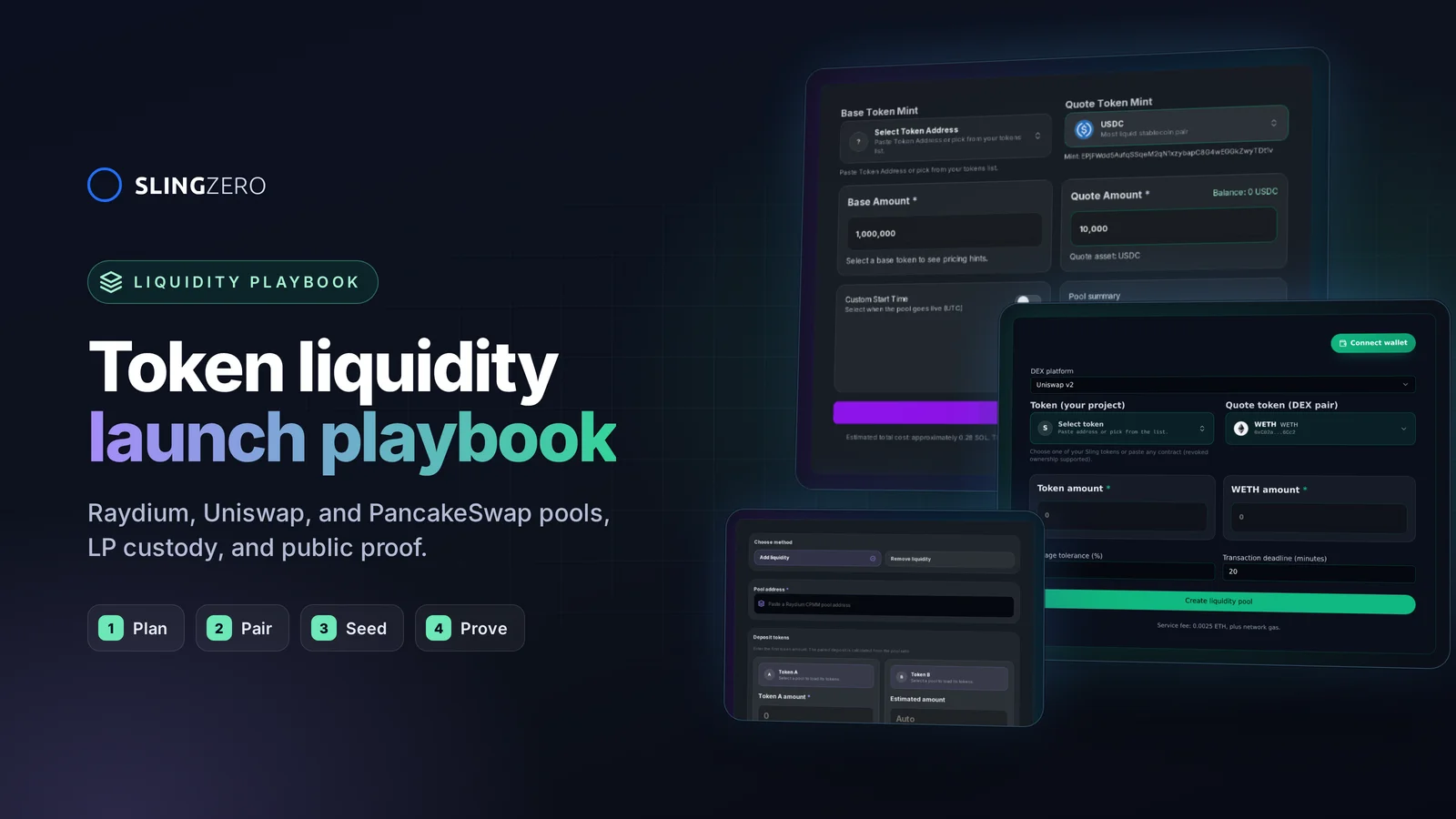
Liquidity is the second launch
Creating a token is the first launch. Creating liquidity is a separate on-chain step. Holders care whether they can buy, sell, verify the official pool, and understand how much control the team has over LP tokens.
This playbook explains how to prepare liquidity for Solana SPL tokens, Ethereum ERC-20 tokens, and BNB Chain BEP-20 tokens using Slingzero's no-code workflows.
Useful links: Solana Liquidity Pool, Create Ethereum Liquidity, Manage Ethereum Liquidity, Create BNB Chain Liquidity, and Manage BNB Chain Liquidity.
What a token liquidity plan must answer
Before creating any pool, document these decisions:
- Which DEX will host the first pool?
- What quote asset will be paired with the token?
- What launch price does the initial ratio imply?
- How much token supply enters liquidity?
- Who controls LP tokens?
- Will LP tokens be locked, transferred, burned, or actively managed?
- What slippage should early buyers expect?
- Where will the official pool address be published?
Without these answers, the market may create its own version of your launch story.
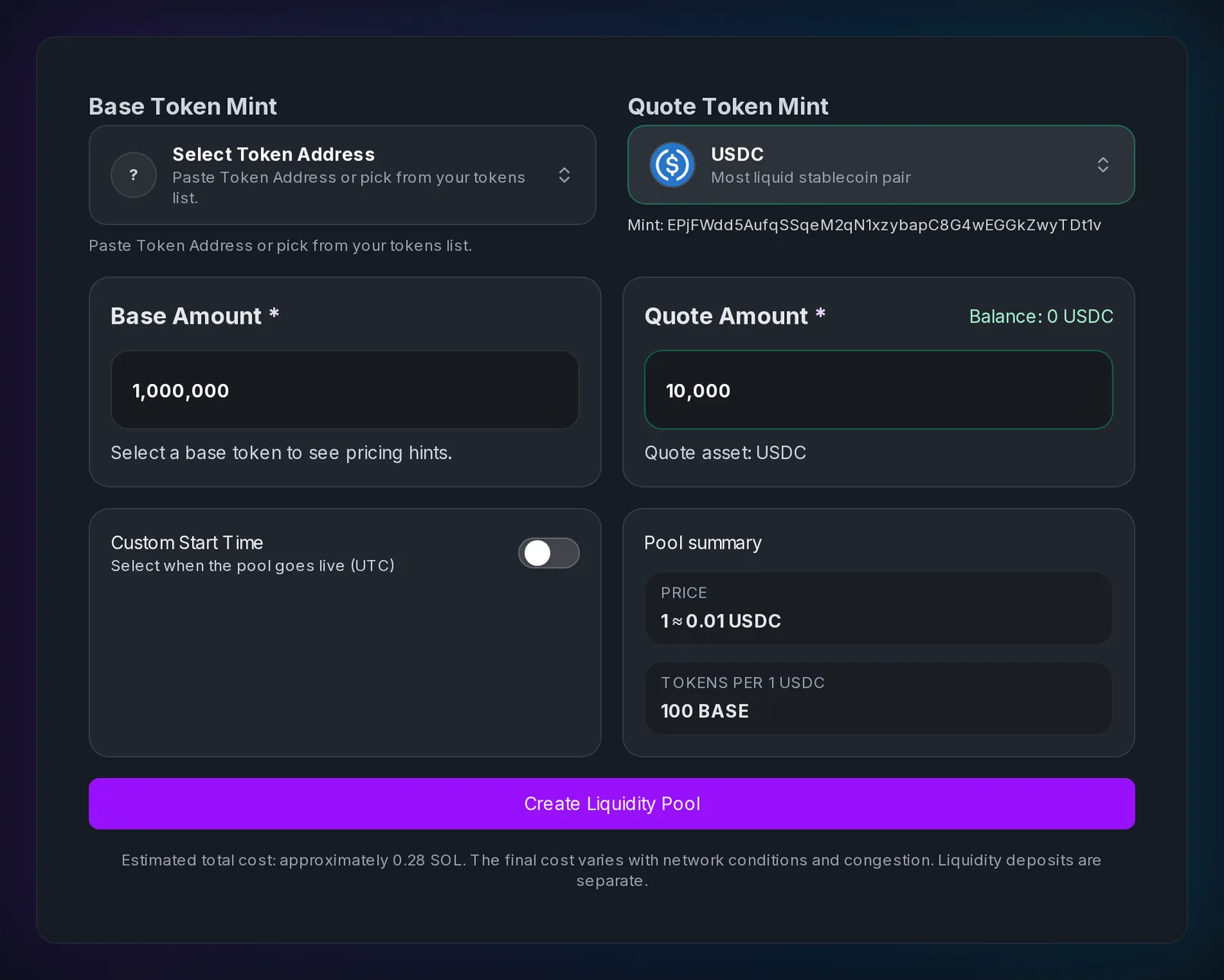
Solana liquidity: Raydium and SPL pool planning
Solana token launches often move quickly. Low fees and fast settlement help, but they also mean the first pool can become the canonical market within minutes. Your job is to make the official pool obvious.
For external validation, link your launch documentation to the official Raydium CPMM pool guide and the Solana Explorer transaction that created the pool.
Before creating a Solana pool
Confirm:
- The SPL token mint address is final.
- Token metadata is correct in wallets.
- Mint authority and freeze authority decisions are documented.
- The wallet creating liquidity has enough SOL for fees and rent.
- The token and quote amounts match your launch price.
- The team knows whether LP tokens will be held, locked, or moved.
Use Create Raydium Liquidity Pools on Solana when you are ready to configure the initial pool, and verify the supported operation shown by the tool before committing funds.
Solana pool information to publish
If you publish a launch article, include the information holders need to verify:
- SPL token mint address
- Raydium pool address and pool type
- Quote asset and initial deposit amounts
- Pool-creation transaction
- LP custody or lock policy
- Date liquidity was created or changed
Keep these values together on one permanent project-controlled page.
Ethereum liquidity: Uniswap and ERC-20 launch depth
Ethereum liquidity is often judged more conservatively because gas costs are higher and liquidity expectations are deeper. A small pool can work for a quiet launch, but a public ERC-20 campaign needs clear slippage expectations and a credible LP custody plan.
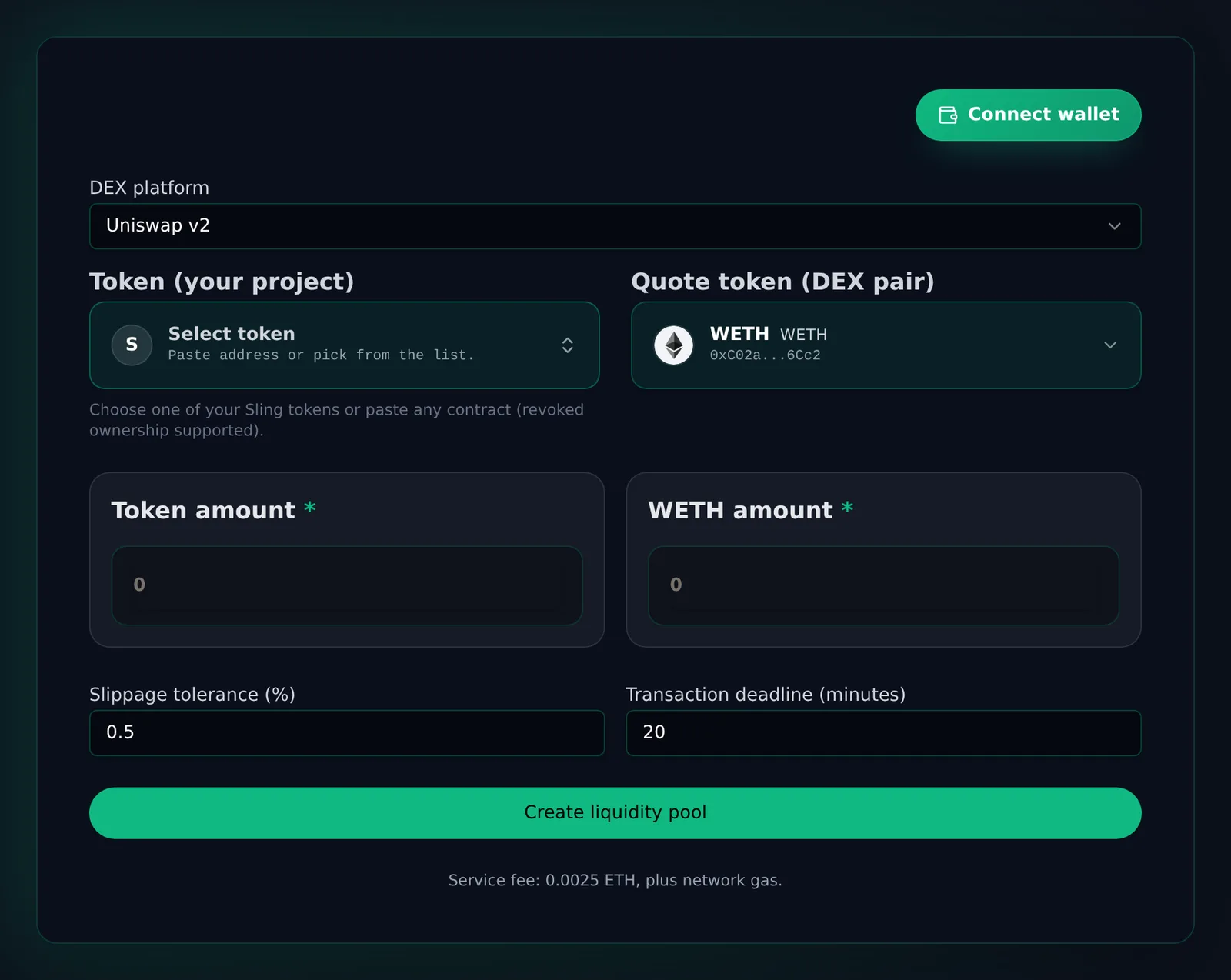
Use Uniswap's official liquidity documentation or providing liquidity guide as an outside reference, then publish the pool and token contract on Etherscan for verification.
Before creating Ethereum liquidity
Confirm:
- The ERC-20 contract is deployed and verified.
- Ownership status is documented.
- The quote asset is selected, often ETH or a stablecoin.
- The initial ratio matches the public token economics.
- The wallet has enough ETH for gas and the liquidity transaction.
- The LP owner address is ready.
Use Slingzero's Ethereum Liquidity Ratio Planner to compare proposed deposit amounts. The planner does not submit a pool transaction or lock LP tokens; use Uniswap's supported interface or another independently verified workflow for pool creation. Use Manage Uniswap Liquidity Positions only for the supported follow-up operations shown there.
Ethereum pool information to publish
- ERC-20 contract and Uniswap pool addresses
- Pool version and fee tier
- Token and quote-asset amounts
- Position owner and management policy
- Creation transaction and later position changes
BNB Chain liquidity: PancakeSwap and BEP-20 launch readiness
BNB Chain launches often expect quick PancakeSwap liquidity and clear ownership status. Because gas is lower than Ethereum, teams can test and adjust more easily, but they still need a public liquidity record.
For outside references, use the official PancakeSwap documentation and link your BEP-20 contract, pair, and liquidity transactions through BscScan.
Before creating BNB Chain liquidity
Confirm:
- The BEP-20 contract is verified.
- Ownership, tax, and fee settings match public claims.
- The quote asset is BNB or a planned stablecoin.
- The initial token and quote amounts create the intended price.
- LP token custody is clear.
- The launch wallet has enough BNB for gas.
Use Slingzero's BNB Chain Liquidity Ratio Planner to compare proposed deposit amounts. The planner does not submit a pool transaction or lock LP tokens; use PancakeSwap's supported interface or another independently verified workflow for pool creation. Use Manage PancakeSwap Liquidity on BNB Chain only for the supported follow-up operations shown there.
BNB Chain pool information to publish
- BEP-20 contract and PancakeSwap pool addresses
- Pool version and fee tier
- Token and quote-asset amounts
- LP owner or position owner
- Creation transaction and later liquidity changes
How to calculate the initial pool ratio
The pool ratio sets the implied starting price. If you deposit 10,000,000 tokens and 10 ETH, the initial price is 0.000001 ETH per token before fees and market movement. For that quote, divide the quote-asset amount by the token amount. The exact mechanics still depend on the pool design.
Before deposit, define:
- Target fully diluted valuation.
- Circulating supply at launch.
- Token amount for liquidity.
- Quote asset amount for liquidity.
- Expected slippage for common trade sizes.
- Maximum acceptable price impact.
If the pool is too shallow, small buys and sells can move price aggressively. If the pool is too deep, the team may overcommit treasury assets before demand is proven.
LP custody options
LP tokens represent a claim on the pool. How they are handled becomes a trust signal.
Team-held LP
The team keeps LP tokens in a treasury wallet or multisig. This allows active liquidity management but requires trust.
Best for:
- Projects that need to rebalance.
- Treasury-managed launches.
- Protocol tokens with formal governance.
Locked LP
LP tokens are moved to a time-lock or lock service. This reassures holders that liquidity cannot be pulled immediately.
Best for:
- Community tokens.
- Meme coin launches.
- Public sales where holder trust is fragile.
Burned LP
LP tokens are sent to an inaccessible address. This is a strong finality signal but removes flexibility.
Best for:
- Fixed, community-first launches.
- Tokens that do not need active LP strategy.
- Projects comfortable with permanent liquidity commitment.
Multisig-controlled LP
LP tokens are controlled by multiple signers. This is often the most balanced choice for serious teams because it reduces single-wallet risk without removing operational control.
Best for:
- Teams with ongoing market operations.
- DAO-controlled assets.
- Tokens that need public accountability and flexibility.
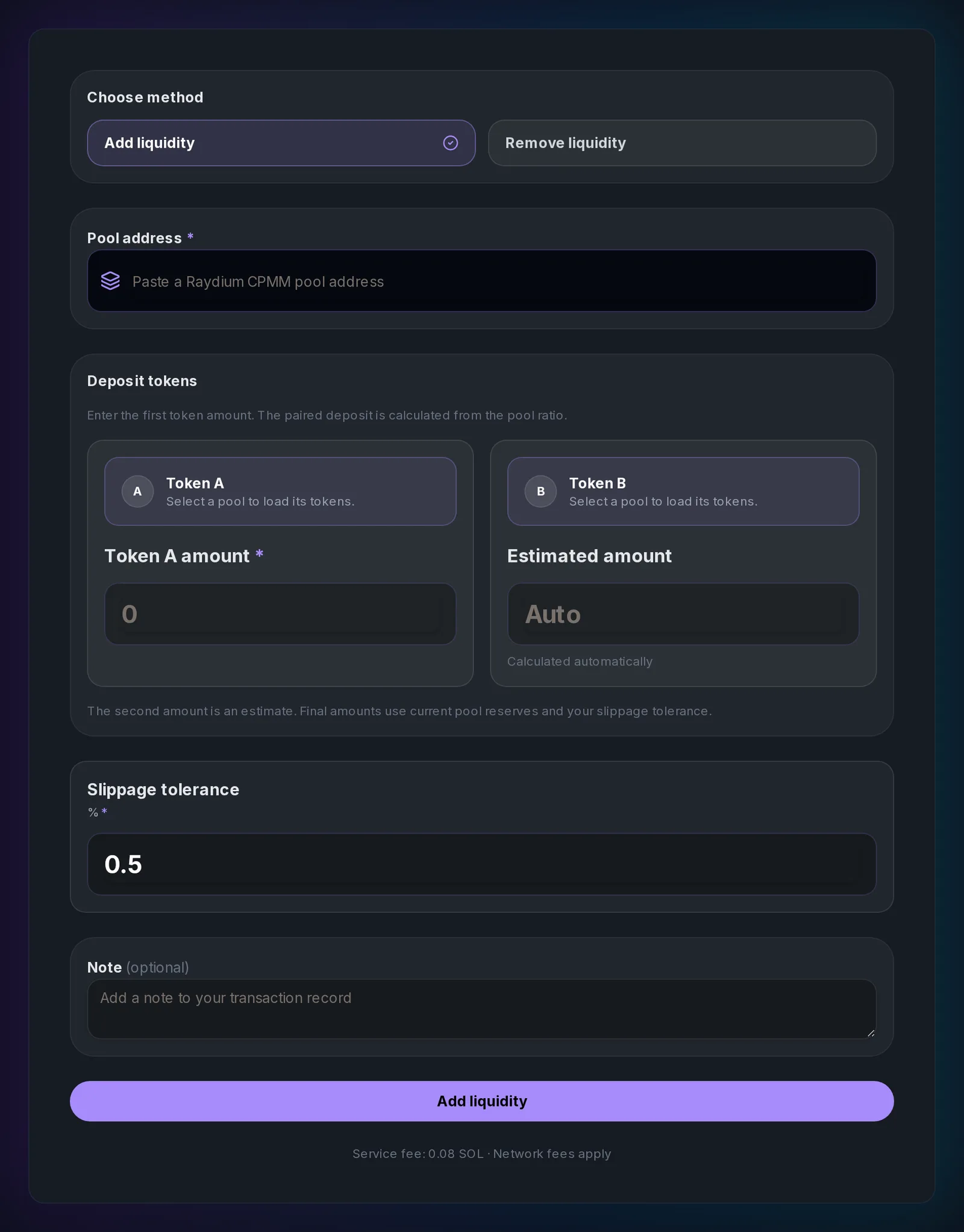
Public liquidity proof checklist
Publish a liquidity proof page or section immediately after seeding the pool.
Include:
- Official token address.
- Official pool address.
- DEX name.
- Quote asset.
- Initial token deposit.
- Initial quote deposit.
- LP owner or lock status.
- Transaction hash.
- Date of pool creation.
- Links to Slingzero management pages where relevant.
This creates a stable source for holders, wallets, and partners.
Common liquidity launch mistakes
Creating liquidity before metadata is final
If holders start trading before the token displays correctly, support issues multiply. Finalize metadata first.
Using the wrong quote asset
ETH, SOL, BNB, USDC, and other quote assets attract different buyers. Choose based on your market, not habit.
Seeding too little liquidity for the announcement size
If your marketing campaign is large but the pool is tiny, normal buying pressure can create extreme price impact.
Failing to announce the official pool
Unofficial pools and copied tokens can appear quickly. Publish the pool address from your official website.
Moving LP tokens without explanation
LP movement can look suspicious if holders do not understand it. Announce locks, transfers, or management actions before they become rumors.
Post-launch liquidity management
Liquidity management does not end after the first pool transaction. Monitor the pool and keep public records.
Track:
- Pool depth.
- Daily volume.
- Price impact for common trade sizes.
- LP token location.
- Fee revenue where applicable.
- Large liquidity changes.
- Holder questions about slippage.
Slingzero's management routes help teams keep these actions organized:
How liquidity documentation supports verification
A token website that publishes liquidity details answers common buyer questions and helps partners or listing reviewers verify the official market.
Strong liquidity content includes:
- A clear H2 such as "Official Liquidity Pool".
- The chain and DEX name.
- The token address and pool address.
- A short explanation of LP custody.
- A FAQ on slippage, pool depth, and liquidity locks.
- Internal links to token management and authority proof pages.
This information also reduces repetitive support questions and makes copied pool addresses easier to detect.
Trusted external liquidity references
Use these outside links for a cleaner trust profile:
- Raydium CPMM pool guide for Solana pool creation terminology.
- Uniswap documentation for Ethereum liquidity concepts and developer references.
- PancakeSwap documentation for BNB Chain liquidity and pool references.
- Solana Explorer, Etherscan, and BscScan for public transaction proof.
FAQ: token liquidity launch
Fast answers for founders comparing token launch, authority, liquidity, and post-launch workflows.
When should I create the liquidity pool?
Create liquidity after the token metadata, authority policy, and launch wallet are ready. For public launches, liquidity is usually seeded shortly before or at the time of announcement.
How much liquidity does a new token need?
There is no universal amount. The right level depends on expected launch volume, price impact tolerance, treasury budget, and whether the token is meant for broad public trading immediately.
Should LP tokens be locked?
For community launches, locking LP tokens can be a strong trust signal. For treasury-managed projects, multisig custody may be more practical. The key is to publish the LP policy clearly.
Can I add more liquidity later?
Yes. Teams often add or remove liquidity as demand changes. Use Slingzero's liquidity management tools to keep the workflow documented.
What is the difference between token creation and liquidity creation?
Token creation deploys or mints the asset. Liquidity creation pairs the token with another asset on a DEX so people can trade it.
Final playbook
- Finalize token metadata before liquidity.
- Decide authority and ownership status before the public pool.
- Choose the DEX and quote asset deliberately.
- Calculate the initial pool ratio.
- Prepare LP custody, lock, or multisig policy.
- Use the correct supported DEX workflow to create liquidity; the Slingzero EVM planners only compare proposed ratios.
- Publish the official pool address and transaction proof.
- Monitor pool depth, slippage, and LP movements after launch.
When you are ready to seed liquidity, use the supported Solana Liquidity Pool flow or compare EVM amounts with the Ethereum ratio planner and BNB Chain ratio planner before continuing through the appropriate DEX interface.