Solana Token Launch Checklist for 2026
Ship a Solana token that earns trust on day one. This launch checklist covers project preparation, authority policies, liquidity strategy, and ongoing communication.
Why this launch checklist matters
Launching a token is more than minting supply. Use this 2026 Solana token launch checklist to plan what happens before, during, and after creation, and verify each completed action on-chain.
If you need an expanded deep dive into authority controls, multisig governance, and emergency response, bookmark How to Launch a SPL Token on Solana with Security Built In and reference it alongside this checklist.
What this guide covers
- Pre-launch preparation your investors will appreciate.
- Launch-day workflows that prevent chaos.
- Post-launch accountability that keeps holders confident.
Pre-launch tutorial: align your foundations
1. Document your token economics
- Define the total supply, circulating supply at TGE, and vesting schedules.
- Explain the utility in plain language on the token landing page; link back to your documentation from the Create Token flow summary screen.
2. Prepare compliant metadata
- Resize logos to <1 MB and export as PNG for wallet clarity.
- Write a concise, descriptive narrative (≤ 300 characters) for metadata JSON.
- Pre-select tags so supporters can filter the project in your My Tokens Dashboard.
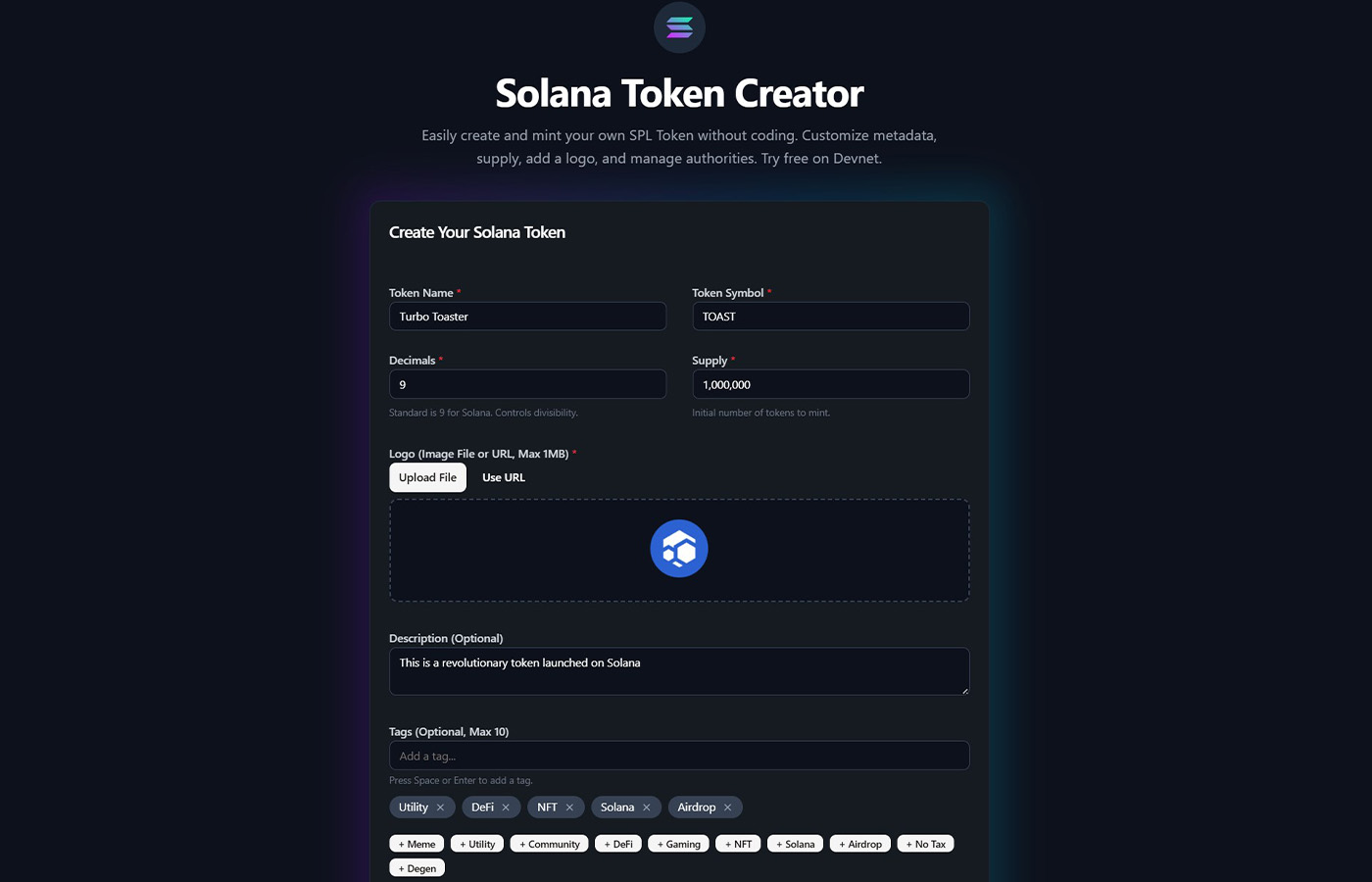
3. Rehearse the creation flow with mainnet settings
Run the exact sling-zero workflow you’ll use on launch day—same wallet, same fees, same metadata—so there are zero surprises when SOL is on the line.
- Use a low-supply disposable mint on mainnet or a private validator; treat it like a dress rehearsal with the full team.
- Capture the Slingzero dialogs and wallet prompts so everyone knows what each confirmation looks like.
- Confirm your network selector matches the wallet network before paying any fees.
Launch day tutorial: execute with clarity
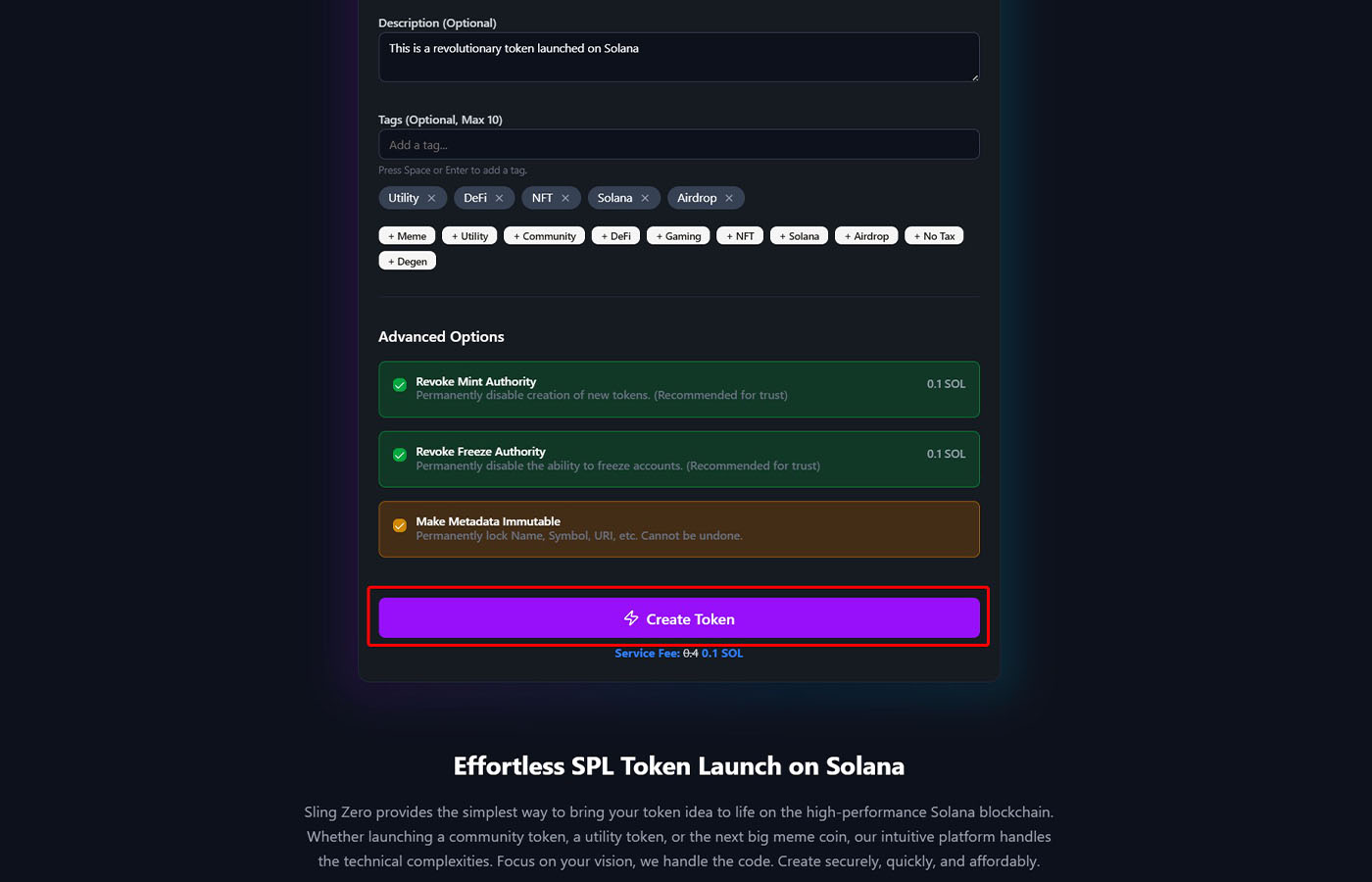
1. Confirm authority settings
On mainnet, double-check the following before minting:
- Mint authority is set to your signer wallet or a multisig.
- Freeze authority is either retained for security or scheduled for revocation via Revoke Freeze Authority.
- Metadata is final; if not, plan to use Update Metadata immediately after minting.
2. Publish transparent proofs
Within minutes of mainnet mint confirmation:
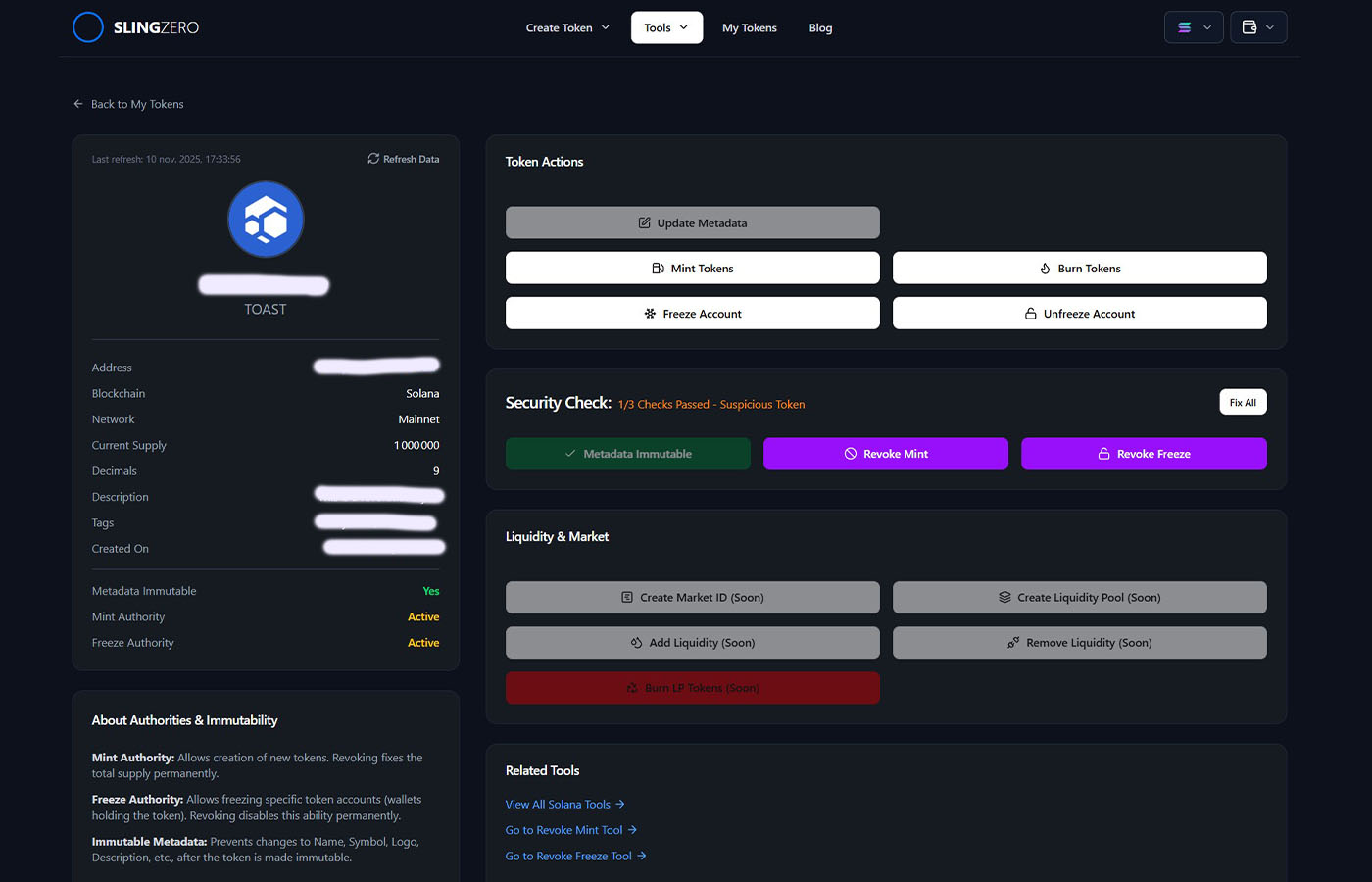
- Share the mint address, explorer link, and Slingzero activity log screenshot in your announcement channel.
- Pin the
authorityStatusscreenshot from My Tokens (shows if mint/freeze is still active). - Add a permanent section on your website with the mint address, read-only explorer link, and current authority policy.
3. Control liquidity intentionally
Avoid impulsive pool creation. First, finalize token allocations and early supporter distributions with Solana Multisender. When ready:
- Seed initial liquidity via Liquidity Pool Tools.
- Publish the pool address and targeted initial price band.
- Monitor metrics in real time, adjusting with additional liquidity or Burn Tokens to manage supply shocks.
Post-launch: stay accountable
1. Automate activity tracking
- Log every authority change, mint, or burn with Activity.
- Keep your own treasury records and reconcile them regularly against explorer data.
2. Communicate roadmap updates
- Host AMA sessions addressing token utility, upcoming feature drops, and governance milestones.
- Update your blog (use Slingzero’s new posts like this one!) whenever there’s a major release, and embed direct links to action pages such as Fix Security or Manage Liquidity.
3. Secure long-term trust
- Revoke unused authorities as soon as practical.
- Archive the final metadata JSON in a public GitHub repo or IPFS pin for auditability.
- Offer regular transparency reports detailing treasury movements and total supply changes.
Final thoughts
Solana’s speed makes clear, timely communication important. Bookmark this checklist, share it across operations and communications, and revisit it before each material authority, metadata, supply, or liquidity update. A disciplined, well-documented launch gives holders a source they can verify.